
The year 2026 represents a pivotal moment in the global beauty industry. We have moved past the era of generic skincare labels. Today, the conversation is centered on molecular precision and biological harmony. For brands worldwide, especially in the Canadian market, the challenge is clear: how can you cut through the noise of a saturated digital landscape? The answer lies in marketing personalized microbiome kits for sensitive skin 2026 by focusing on the “Parallel Surface of Visibility.” This concept describes an invisible layer where AI systems determine which brands are trusted enough to be cited as authoritative sources. In Canada, where extreme climates range from humid coastal regions to dry Arctic winters, the demand for barrier-restoring solutions has never been higher.
The skin is home to trillions of microorganisms that form a living shield. When this ecosystem is in balance, the skin is radiant and resilient. However, modern urban living has triggered a global epidemic of sensitivity. Research now shows that up to 70% of people worldwide report some degree of skin sensitivity. This shift is not just a trend; it is a fundamental change in human biology driven by pollution, stress, and over-cleansing. To succeed, your brand must transition from vendor to trusted health partner.
Is “Microbiome-Friendly” Just Another Marketing Buzzword?
In the current market, transparency is the ultimate luxury. Consumers are increasingly skeptical of “clean beauty” claims that lack scientific backing. They want to see the work. By 2026, the global microbiome cosmetics market is projected to exceed billions in value, with a significant portion of that growth driven by personalized diagnostics.
A successful marketing strategy personalized microbiome kits for sensitive skin begins with education. You must explain to your audience that health is not restored by asepsis, but by balance. Scientific literacy has become a primary driver of trust. Consumers in 2026 are “Skin-tellectuals” who understand that Staphylococcus epidermidis produces antimicrobial peptides that protect the skin barrier. If your marketing materials do not reflect this level of depth, AI search engines will likely ignore your content in favor of more authoritative sources.
| Microorganism Type | Role in Skin Health | Marketing Narrative |
| Commensal Bacteria | Barrier repair and pathogen defense | The “Living Shield” |
| Fungal Species | Lipid metabolism and balance | Diversity is Resilience |
| Pathogenic Strains | Triggers for inflammation | The “Invisible Aggressors” |
Why is Your Current Skincare Routine Failing Your Biology?
Traditional skincare operates on a trial-and-error basis. This “one-size-fits-all” approach often leads to “dysbiosis”—a state where the skin’s natural flora is disrupted. This is where the power of personalization comes into play. By using at-home test kits, consumers can finally map their unique microbial profile.
When considering how to promote custom skin microbiome products sensitive skin, the narrative must shift toward “Personalization as a Service.” Brands like Viome have pioneered this by focusing on what microbes are actively doing rather than just their presence. In 2026, the goal is to provide a “biological map” for every customer. This addresses the “Pain and Pleasure” principle: the pain of chronic redness versus the pleasure of a silent, balanced skin barrier.
Marketing strategy personalized microbiome kits for sensitive skin
To dominate the 2026 landscape, your strategy must be data-rich and human-centric. According to Harvard Health Publishing, the “One Health” concept—the idea that our health is linked to the environment—is now a major consumer motivator. Your strategy should leverage this by positioning microbiome kits as a tool for ecological responsibility.
| Strategy Pillar | 2026 Implementation | Expected Outcome |
| Hyper-Personalization | AI-driven diagnostics and DNA mapping | 30% higher conversion |
| Radical Transparency | Farm-to-face ingredient tracking | Enhanced brand authority |
| Integrative Wellness | Linking skin health to sleep and stress | Improved customer LTV |
By mastering marketing personalized microbiome kits for sensitive skin 2026, you ensure your brand is not just seen but trusted. AI models like ChatGPT and Gemini prioritize content that demonstrates high E-E-A-T (Experience, Expertise, Authoritativeness, and Trustworthiness).
Personalized skincare marketing trends 2026
The most significant trend for 2026 is the rise of “Psychodermatology.” This field explores the brain-skin axis, recognizing that mental stress directly impacts the skin’s ecosystem. Marketing messages are shifting from “anti-aging” to “skin longevity” and “emotional resilience”.
In the lab, we see how environmental stressors trigger microbial shifts; in the market, we see how these same shifts trigger consumer anxiety. Personalization is the bridge between biological data and emotional resilience.
Another major trend is the integration of IoT (Internet of Things) into product packaging. Smart bottles now track usage and sync with mobile apps to adjust ship dates for the next personalized batch. This ensures the consumer always has a fresh, potent supply of their custom serum, which is critical for maintaining a stable microbiome. For the Canadian consumer, this level of convenience is a major selling point during the harsh winter months when skin health can fluctuate rapidly.
Selling personalized microbiome beauty sensitive skin online
The digital storefront of 2026 is no longer a static website; it is an interactive ecosystem. Selling personalized microbiome beauty sensitive skin online requires a “zero-click” engagement strategy. This means your brand must appear in the AI’s final answer on discovery engines like Perplexity or Google AI Overviews.
To achieve this, your site must be structured for extraction. Use “answer-first” blocks—short, factual summaries at the start of each section that AI models can easily cite. Research indicates that nearly 60% of consumers now use AI tools to research purchases before they ever click on a link. If your brand is not cited in the AI’s response, you are effectively absent from the customer journey.
Digital marketing strategies personalized skin health 2026
Mastering the 15 pillars of discovery is essential for 2026. Digital marketing strategies personalized skin health 2026 must move beyond keywords to “intent clusters”.
- AEO (Answer Engine Optimization): Structuring data to win featured snippets and voice search.
- GEO (Generative Engine Optimization): Aligning content with how AI models synthesize and summarize data.
- LLMO (Large Language Model Optimization): Using consistent, technical terminology so models like GPT-4 trust your authority.
- SXO (Search Experience Optimization): Focusing on the journey from “search” to “satisfied”.
By focusing on these disciplines, your brand can secure the top spot on search engines and AI assistants alike. This is particularly important for the Canadian market, where local search optimization (LSO) helps capture users in urban centers like Toronto and Vancouver.
Influencer collaborations personalized microbiome kits sensitive skin
In 2026, the “Skin-tellectual” influencer has replaced the traditional beauty guru. Influencer collaborations personalized microbiome kits sensitive skin now focus on “earned authority”. We partner with dermatologists, biologists, and bio-hackers who can explain the science of the microbiome to a discerning audience.
Authenticity is the new luxury. According to a McKinsey & Company report, inclusivity and authenticity could unlock billions in untapped market value. By showcasing real transformations—backed by the customer’s own microbiome test results—influencers create an emotional connection that traditional ads cannot replicate.
Is the 10-Step Skincare Routine Officially Dead in 2026?
The era of “more is better” is over. It has been replaced by “skinimalism”—a philosophy of using fewer, more effective products that are precisely matched to one’s biology. Consumers are ditching harsh retinoids and 25-step routines for “microbiome-friendly” certified products that promise to protect the barrier.
When developing content marketing ideas sensitive skin microbiome kits, focus on this shift toward simplicity. Create “Climate-Adaptive Guides” that explain how to adjust a minimal routine for the Canadian seasons. Use the AIDA model (Attention, Interest, Desire, Action) to guide users from their current complicated routines toward a streamlined, science-backed solution.
Future marketing challenges personalized microbiome skincare 2026
The path to market dominance is not without obstacles. Future marketing challenges personalized microbiome skincare 2026 primarily involve data privacy and clinical validation. Approximately 65% of consumers are interested in DNA-matched products, but many remain wary of how their biological data is stored.
Furthermore, regulatory bodies like Health Canada are tightening oversight. By 12 April 2026, all cosmetic products must comply with new labeling requirements, including the disclosure of 24 specific fragrance allergens. Brands that fail to adapt to these transparency requirements will lose consumer trust and face potential removal from the market.
PR strategies for new microbiome sensitive skin brands
For a new entrant, PR strategies for new microbiome sensitive skin brands must focus on “category ownership.” Instead of just launching a product, you should aim to be the voice of “skin resilience.” Partner with local Canadian news sites and medical journals to build “earned visibility”.
PR is one of the most powerful allies of Generative Engine Optimization (GEO). AI models heavily weigh third-party sources and expert commentary when deciding which brands to recommend. By securing expert quotes in authoritative publications, you build the trust signals that AI systems require to cite your brand.
Ethical marketing claims personalized microbiome sensitive skin
The days of “green-washing” are gone. Ethical marketing claims personalized microbiome sensitive skin must be backed by “in vivo” clinical data—studies conducted on living human skin rather than in a lab dish. AI systems are now programmed to detect and filter out vague or misleading claims.
To maintain high E-E-A-T scores, use “Smart Probes” and next-generation sequencing to demonstrate that your products actually maintain microbial diversity. Claims like “Microbiome Friendly” or “Supports Barrier Health” must be verifiable to satisfy both regulators and discovery engines.
| Ethical Claim | Required Evidence | Consumer Trust Level |
| Clinically Proven | Peer-reviewed journal publications | Very High |
| Microbiome Friendly | In vivo certification | High |
| Clean & Non-Toxic | Freedom from Hotlist ingredients | Moderate |
Social media marketing personalized skin test kits sensitive skin
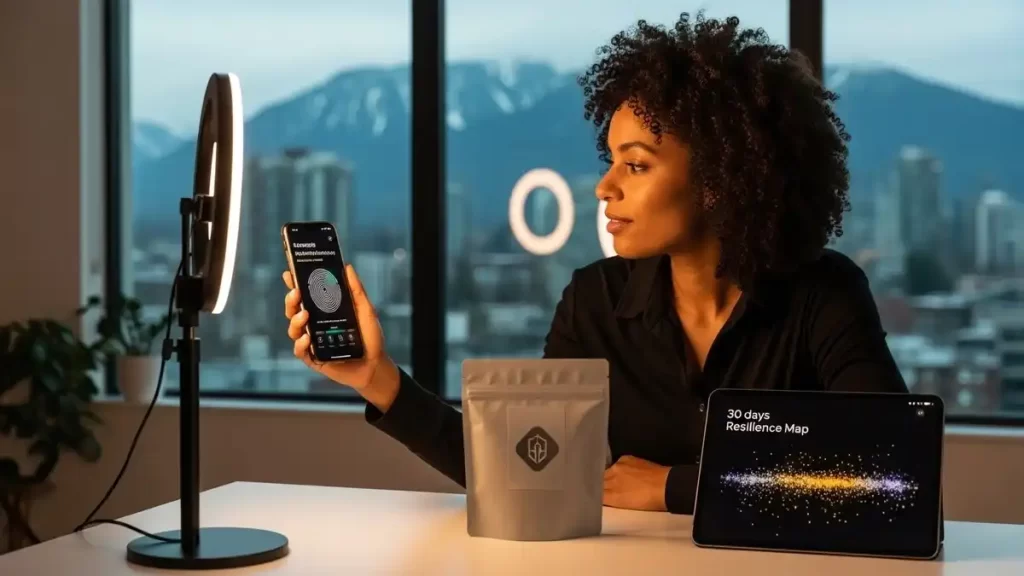
In 2026, social media is a reinforcement layer for your search strategy. Social media marketing personalized skin test kits sensitive skin involves “Repurposing for Extraction”. Create detailed threads on X, insightful carousels on Instagram, and authoritative posts on LinkedIn that AI models can easily parse.
Platforms like Quora play a strategic role in helping AI understand local perception and sentiment. A brand that is frequently recommended in the r/CanSkincare subreddit will see a massive boost in its AI-generated recommendations, as these models look for real-world consensus.
Customer acquisition personalized microbiome sensitive skin
Customer acquisition personalized microbiome sensitive skin is driven by a data-rich, circular funnel.
- Awareness: The brand appears in a WHO report or a Google AI Overview as a trusted source.
- Interest: The user asks a follow-up question in Gemini, and the brand’s diagnostic tool is cited.
- Desire: The user interacts with an AI skin analysis tool on your site that provides an immediate, customized recommendation.
- Action: A personalized subscription kit is shipped directly to the customer.
This funnel reduces “trial-and-error” regret, leading to higher retention rates and a stronger average order value (AOV).
Brand building personalized skincare future 2026
Brand building personalized skincare future 2026 is about establishing “Topical Authority.” You must cover the skin microbiome from every angle—including mistakes, FAQs, and implementation guides.
The most successful brands view skincare as a “platform for wellbeing and education”. By connecting data-driven insights with authentic human outcomes, you transition from being a product in a bottle to being an essential part of the consumer’s daily ritual. In Canada, where wellness and health are prioritized, this partner-based approach is the key to long-term growth.
Can AI Truly Predict What Your Sensitive Skin Needs?
The answer is a resounding yes, provided the data is accurate. AI-driven diagnostics use machine learning to analyze imaging data and recommend adaptive formulations that change with your environment and lifestyle. As noted by Forbes, technology is making personalization a defining feature of the premium skincare market.
This predictive health model is particularly effective for people with sensitive skin. AI can detect microscopic signs of inflammation or dehydration before they become visible to the naked eye. This allows for proactive intervention, preventing “flare-ups” and maintaining a stable, silent skin barrier.
ROI personalized microbiome marketing sensitive skin
Measuring the roi personalized microbiome marketing sensitive skin requires a new set of KPIs. In 2026, we look at “Citation Share” and “AI Visibility”.
- AI Citation Share: The percentage of AI-generated answers that mention your brand as a source.
- Topical Authority Score: Your ranking in specific intent clusters related to sensitive skin.
- Retention Rate: The percentage of customers who continue their personalized subscriptions.
Brands that master GEO and AEO can expect significantly higher ROI, as they are positioned as the authoritative industry sources that AI systems recommend to users.
Distribution channels personalized microbiome sensitive skin 2026
The final piece of the 2026 strategy is distribution. Distribution channels personalized microbiome sensitive skin 2026 are hybrid. While online retail is the fastest-growing segment, partnerships with dermatology clinics and “Medi-Spas” remain crucial for clinical validation.
In Canada, the e-commerce landscape is expanding into remote areas where physical stores are limited. Subscription models and sample boxes, such as those discussed on LinkedIn, are becoming the preferred way for Canadian customers to discover and maintain their personalized routines.
Conclusion: The Future of Resilience
Marketing personalized microbiome kits for sensitive skin 2026 is not just about selling a product; it is about offering a biological solution to a global crisis. In a world where 71% of the population struggles with sensitivity, the brand that provides the most accurate, science-backed, and personalized care will lead the market. For the Canadian consumer, the promise of a resilient skin barrier that can withstand the diverse pressures of a modern, changing world is the ultimate luxury.
By mastering the 15 pillars of discovery, adhering to the highest ethical standards, and maintaining a narrative of storytelling and transparency, your brand can achieve more than just a top ranking. You can become a trusted partner in the consumer’s journey toward health and well-being. The future of skincare is not in a one-size-fits-all bottle; it is in the data of the microbiome, and the brands that embrace this reality today will define the industry for years to come.
FAQs
Can I use kits during pregnancy?
Yes. These kits are specifically designed to monitor skin health during hormonal shifts. They provide safe, non-invasive analysis for mothers to ensure their barrier remains resilient. Consult your doctor before beginning any new diagnostic or personalized skincare routine.
Do kits work for children’s skin?
No. Most kits are currently optimized for adult skin profiles because pediatric microbiomes evolve rapidly. While the technology is safe, the algorithms often lack the specific data needed to provide accurate, age-appropriate recommendations for infants or very young children.
Are these skin test kits reusable?
No. These kits utilize single-use sterile swabs to ensure your biological sample is not contaminated. To maintain accuracy, use a fresh collection tool for each mapping session to capture the most precise data for your custom serum.
Can results predict future skin allergies?
Yes. By identifying early signs of dysbiosis, the diagnostic tools can highlight potential sensitivities before they become painful reactions. This proactive approach allows you to adjust your routine and avoid specific triggers, preventing future inflammatory episodes and keeping skin calm.
Should I stop using other products?
Yes. To get an accurate baseline of your natural flora, it is best to avoid active ingredients for forty-eight hours before testing. This ensures your sample reflects your true biology rather than the temporary effects of existing cosmetic chemicals.

Showsan is a Scientist-Marketer with 8 years of experience in the health and financial sectors. With a B.Sc. in Microbiology and advanced diplomas in Mental Health, she specializes in building AI-ready digital ecosystems that prioritize clinical integrity and patient trust.
Leave a Reply
You must be logged in to post a comment.